By Dr. Katina Clarke, PhD, LPCMH
Staying married after infidelity is not the same as rebuilding the marriage. Relational reconstruction requires emotional safety, closeness, and intimacy, and I believe they develop in that order.
This article is for educational purposes and does not replace individual or couples therapy. If you are in crisis, please call or text 988 or contact your local emergency services.
You can stay married after infidelity and never actually rebuild the marriage. Most couples do not realize the difference until years later.
You can remain in the same house, raise your children, celebrate anniversaries, take vacations, have sex, and continue doing everything that makes you look like a married couple. From the outside, the relationship may appear to have survived. Inside the marriage, however, one or both people may have learned how to function without ever feeling truly connected again. The absence of constant conflict can begin to look like progress, particularly when enough time has passed and life has resumed.
But staying married and reconstructing a marriage are not the same thing.
Why Getting Your Old Marriage Back May Be the Wrong Goal
I have worked with couples who genuinely want to remain together after betrayal but tell me they want their old marriage back. They want to return to the relationship they had before the affair was discovered, when conversations felt easier, intimacy felt natural, and they did not question what was true. I understand the desire to return to something familiar after betrayal has made so much feel uncertain.
The difficulty is that reconstruction cannot simply be an attempt to recreate the old marriage. The old marriage is the marriage in which the betrayal occurred, and both people now know something about that relationship that they did not know before.
This does not mean everything about the old marriage was unhealthy or false. There may have been years of genuine love, friendship, shared values, family, sacrifice, memories, and connection. Those things matter and may be strong enough to remain. Reconstruction requires the couple to determine what from the original relationship is worth preserving, what needs to be repaired, and what needs to be replaced with something different.
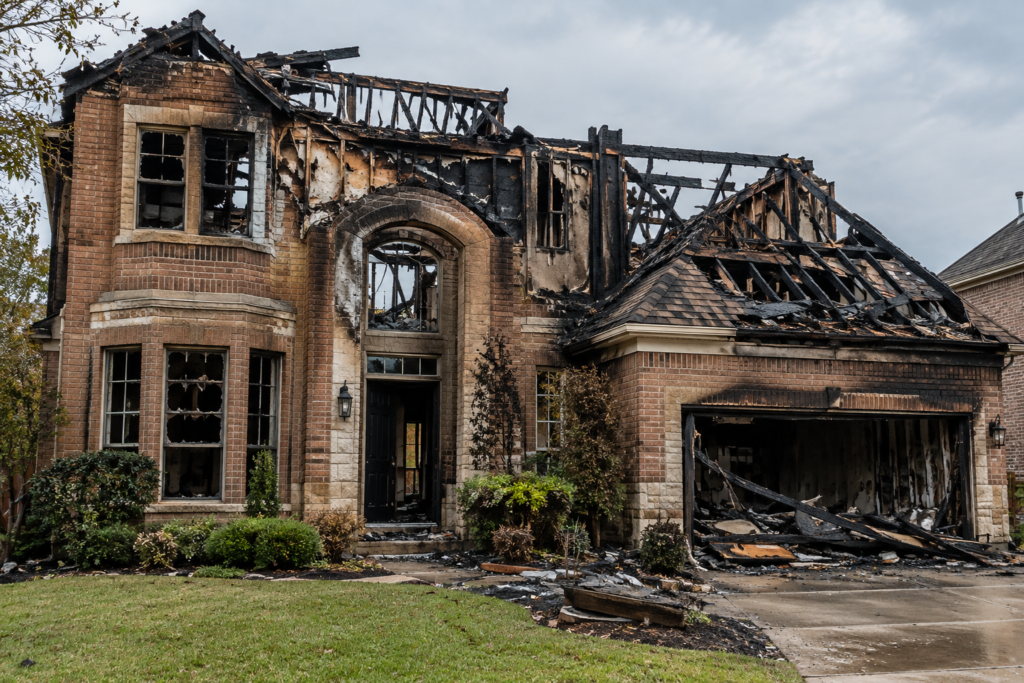
I often compare this process to rebuilding a house after a significant fire. The brick and foundation might remain if they are structurally sound, but damaged walls, flooring, wiring, and other materials cannot simply be put back because they were part of the original house. I explore this comparison in more detail in After Infidelity: You Cannot Rebuild a Burned Down Marriage by Moving the Furniture Back In.
After Infidelity: You Cannot Rebuild a Burned Down Marriage by Moving the Furniture Back In
Relationships require the same consideration. If secrecy existed in the marriage before the betrayal, reconstruction may require a different level of transparency. If difficult conversations were routinely avoided, the couple may need to develop a different way of communicating. If boundaries were unclear or repeatedly crossed, new boundaries have to be established. These are not simply new experiences added to the old relationship. They are changes to the structure of the relationship itself.
The Clarke Relational Reconstruction Model
This understanding is at the center of what I call the Clarke Relational Reconstruction Model.
The model draws from three established bodies of theory: John Bowlby’s attachment theory, which helps explain how relational experiences shape expectations of safety, trust, and connection; Murray Bowen’s family systems theory, which considers the relationship as an interconnected emotional system while recognizing the importance of individual differentiation; and interpersonal neurobiology, developed through the work of Daniel Siegel, which examines how relationships and the nervous system influence one another.
My contribution is the synthesis of these foundations into a specific sequence for relational reconstruction after betrayal:
Emotional Safety → Closeness → Intimacy
Individual work occurs throughout the reconstruction process. Emotional Safety creates the conditions in which Closeness can develop. Closeness provides the connection from which Intimacy can grow.
This does not mean relationships heal in perfectly separated stages. Couples can move forward and backward throughout the process. It does mean that when one area remains difficult, it can be useful to look at what is happening underneath it. If Intimacy feels disconnected, I look at Closeness. If Closeness remains difficult, I look more carefully at Emotional Safety.
This model assumes that the betrayal has ended and that the relationship is free of abuse, coercion, or fear. If safety is a concern, individual support should come before any work as a couple.
Rebuilding Emotional Safety After Infidelity Comes First
Imagine finally asking the question that has been sitting in your chest for weeks. Where were you really? Who were you texting? Is there anything else I do not know? And instead of bracing yourself for another argument about why you are still bringing it up, you receive an honest, steady answer.
That shift, from bracing yourself to being able to ask, is what I mean by Emotional Safety.
After infidelity, we often talk about rebuilding trust. I use the term Emotional Safety because I believe it describes something broader than whether the betrayed partner believes what they are being told. It asks whether they can fully participate in the relationship, bringing their questions, fears, anger, and vulnerability into it without continually protecting themselves from another emotional injury.
Choosing to remain married does not create an obligation to trust again, and Emotional Safety should not be demanded from the person who was betrayed. That does not mean the work of repair can wait indefinitely. It means trust is earned through the behavior of the person who caused the injury, not owed because the couple stayed together.
Emotional Safety develops through repeated experiences in which the relationship becomes increasingly trustworthy. Honesty becomes consistent. Transparency is offered rather than repeatedly pursued. Accountability remains present after the immediate crisis has passed. The person who caused the betrayal becomes better able to hear the impact of their choices without making every difficult conversation about their own discomfort.
The betrayal does not disappear from the couple’s history when Emotional Safety begins to return. What changes is that the injured partner begins accumulating new experiences that can exist alongside that history. This is different from forgetting what happened or deciding that enough time has passed. It is the gradual development of a relationship in which words and behavior are becoming more consistent.
Emotional Closeness Has to Be Rebuilt Too
You can sit across the table from each other every night, plan the same vacations, split the same chores, sleep in the same bed, and still feel like you are living alongside a stranger. That is the gap Closeness is meant to close.
As Emotional Safety develops, Closeness becomes more possible. I distinguish Closeness from proximity because couples can spend significant amounts of time together while remaining emotionally disconnected. Closeness is emotional accessibility. It is the experience of being able to reach each other again.
Conversations gradually move beyond managing the immediate crisis. Partners become curious about each other’s thoughts and experiences. Vulnerability becomes more possible because there is increasing confidence that what is shared will be handled with care.
This is also where new shared experiences begin to take on a different meaning. Date nights, vacations, affection, laughter, and time together no longer have to prove that the marriage is okay. Closeness is not evidence that the old marriage has returned. It is evidence that a different relationship is developing between the same two people.
Reconstruction is not successful simply because a couple becomes skilled at performing the relationship they had before. It becomes meaningful when the way they experience each other begins to change.
What Happens to Intimacy After Infidelity?
Some couples find themselves reaching for each other physically more than ever immediately after an affair is discovered. Others find they cannot bear to be touched. If you have experienced either response and wondered what it means about your marriage, there may be another way to understand it.
Within the Clarke Relational Reconstruction Model, Intimacy includes the emotional and physical vulnerability that becomes possible when Emotional Safety and Closeness are present. It is not limited to sex, although physical intimacy is often its most visible and most discussed expression.
Physical intimacy after infidelity can be complicated. Having more sex does not necessarily mean the marriage is healing. Having less sex does not necessarily mean the marriage cannot heal. Physical intimacy after betrayal can represent genuine desire and connection, but it can also represent reassurance, fear of losing the relationship, a need to feel wanted, or an attempt to prove that the marriage remains intact. For this reason, I do not view the return of physical intimacy as the primary measure of relational recovery.
When Emotional Safety is developing, the defenses that became necessary after betrayal can gradually begin to lower. When Closeness develops, vulnerability can become less threatening. Intimacy can then become an expression of connection rather than being given responsibility for creating it.
Both Partners Have Individual Work to Do
Reconstructing a marriage after infidelity is relational work, but it is also individual work. Both partners have work to do, although their responsibilities are not the same. Reconstruction does not require both people to accept equal responsibility for an injury that one person caused. It does require that neither person lose themselves in the process of rebuilding.
The Partner Who Was Unfaithful
The work extends beyond ending the affair and apologizing. There has to be an honest examination of the decisions, boundaries, rationalizations, and personal vulnerabilities that allowed the betrayal to occur.
In my clinical experience, many affairs do not begin with the final act of betrayal. There were often decisions before that decision. Understanding those earlier choices matters. A promise that something will never happen again has greater meaning when the person making that promise understands how they became capable of making the choices that led to the betrayal.
The Betrayed Partner
The betrayed partner has different individual work. They may need to determine what they now require to feel emotionally safe. They may need to establish or redefine boundaries and learn to trust their own perceptions again. They may also need to reconnect with parts of themselves that became consumed by monitoring, questioning, investigating, or grieving during the crisis.
One person is working to understand how they caused an injury. The other is working to understand what that injury changed within them. A healthier marriage cannot require either person to disappear in order for the relationship to remain intact.
How Do You Know Whether Your Marriage Is Actually Rebuilding?
If you have experienced infidelity and chosen to remain in your relationship, there may be a more useful way to evaluate your progress than asking whether things are finally getting back to normal. Consider whether the relationship is becoming different in the places where it needed to become different.
Begin with Emotional Safety:
- Has honesty become more consistent?
- Is transparency offered rather than demanded?
- Does accountability remain even when the affair is no longer discussed every day?
- Can questions be asked without punishment, defensiveness, or pressure to move on?
Then consider Closeness:
- Can you reach each other emotionally?
- Can difficult conversations happen without immediately becoming defensive exchanges?
- Are you beginning to experience each other differently, or are you simply spending more time together?
Finally, consider Intimacy:
- Does emotional and physical intimacy feel like an expression of the connection developing between you?
- Or is intimacy being used to reassure one or both of you that the marriage survived?
Then ask yourself one larger question: What exists in this marriage today that did not exist in the marriage where the betrayal occurred?
Perhaps there is more honesty. Perhaps there are stronger boundaries. Perhaps difficult conversations are no longer avoided. Perhaps there is greater emotional accessibility. Perhaps both people have developed a stronger sense of themselves within the relationship.
If very little has changed beneath the surface, new dates, renewed intimacy, and fewer arguments may represent new furniture placed in a house that has not yet been rebuilt. The goal is not to make the marriage resemble what existed before the betrayal. The goal is to construct a relationship that is emotionally safer, more connected, more honest, and more capable of sustaining genuine intimacy.
Where Do You Begin After Infidelity?
You do not have to decide everything about your marriage today. You may know that you want to rebuild. You may still be deciding whether you want to stay. You may be the person who was betrayed and still be trying to understand what happened. You may be the person who caused the betrayal and realize that saying “I’m sorry” is not enough to understand why it happened. Wherever you are, the work can begin before every decision has been made.
If You Can Meet in Wilmington, Delaware
I work with individuals and couples navigating infidelity, betrayal, relationship reconstruction, and difficult decisions about what comes next. If you live locally or are willing to travel, you can learn more about couples therapy in Wilmington, Delaware and request an appointment through Yellow Door Consulting.
Request an Appointment at https://yellowdoorconsulting.com/contact/
If You Are Not Able to Meet in Person
If you are not ready for counseling, cannot travel to Wilmington, or prefer to begin privately, I have developed personalized guided journals that allow you to begin this work on your own terms.
These are not generic relationship workbooks. Each journal is created from your private responses to a detailed questionnaire. The questions, reflections, and exercises you receive are built around your specific circumstances and where you are in the process. Your personalized journal is delivered privately to your inbox within four hours of completing your questionnaire.
There are personalized journals for:
- The betrayed partner who is still deciding what they want
- The partner who was unfaithful and is ready to examine why
- Couples who have decided to stay and begin rebuilding
- Individuals examining their own relationship patterns and identity
- Couples who want to understand each other more deeply
- Couples preparing for marriage who want to have important conversations before problems develop
The journals are grounded in clinical theory and informed by the Clarke Relational Reconstruction Model.
Explore the Personalized Journals at DrKatinaTalks.com™.
The journals are a reflective resource and are not a substitute for therapy.
Dr. Katina Clarke, PhD, LPCMH
Licensed Therapist | Social Psychologist | Author | Psychoeducational Resource Developer
Founder, Yellow Door Consulting